


Montessori Floating Ball Breathing Toy
Montessori Floating Ball Breathing Toy
Easy to Clean: Simple design makes cleaning quick and effortless.
Builds Oral Strength: Supports healthy chewing and oral development.
Colorful and Attractive: Bright colors make playtime fun and engaging.
BUNDLE & SAVE
Estimated delivery: 7–14 business day.
Couldn't load pickup availability

Montessori Floating Ball Breathing Toy
This is such a fantastic sensory toy! My daughter enjoys the target games and challenges, and I love that it encourages fine motor skills and lung strength. It’s colorful, safe, and really keeps her entertained.
Fast Shipping & 30-Day Money-Back Guarantee
Fast Shipping & 30-Day Money-Back Guarantee
We offer a 30-Day Money-Back Guarantee to ensure customer satisfaction. If you are not happy with your order, you may return it within 30 days for a smooth and convenient refund or exchange.
Safety You Can Trust
Safety You Can Trust
🛡 U.S. Consumer Product Safety Commission (CPSC)
Meets U.S. federal child safety standards to help protect your little ones during play and learning.
🔬 ASTM International
Tested to meet trusted international safety standards for children’s products.
🇪🇺 CE Marking
Certified to comply with European safety, health, and environmental requirements.
Suitable for Ages 3+
Suitable for Ages 3+
The toy is designed for children three years and older, making it appropriate for toddlers developing breath control and coordination.


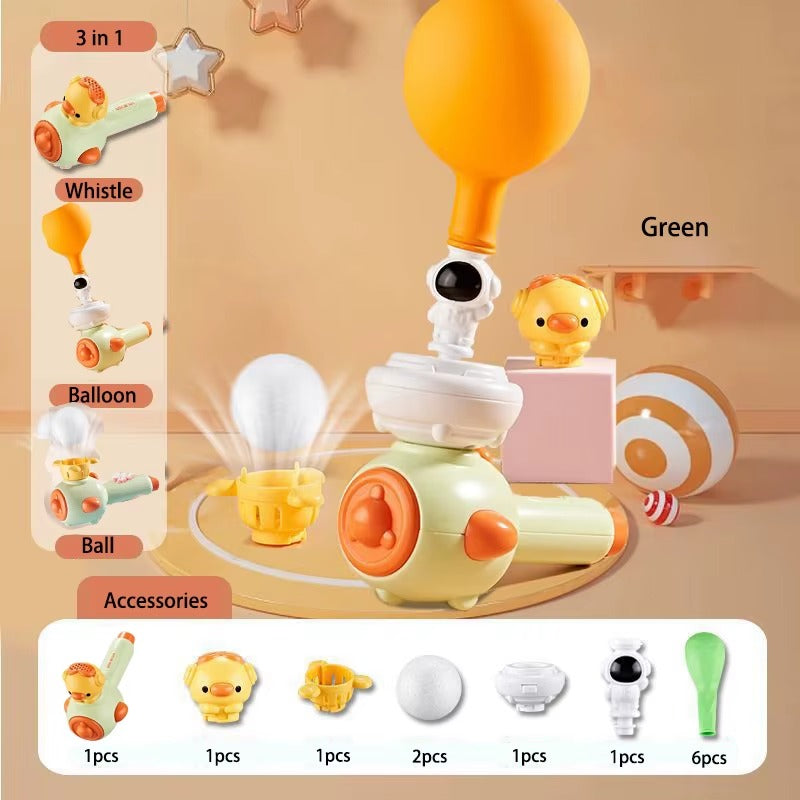

Breath Control Practice
The blowing activities help children practice steady and controlled breathing. This strengthens their lungs and improves respiratory health. Over time, it also enhances focus and self-regulation skills during play.
Floating Balls, Growing Minds!
Watching the lightweight balls float in the air keeps children engaged and curious. As they play, they develop important skills like hand-eye coordination, focus, and breath control. This fun activity turns every game into a learning experience that supports early childhood development.

Target Games
Kids can aim the balls using the blow-pipe at cups, rings, or other targets. This adds an exciting challenge to their playtime. It also helps improve hand-eye coordination and focus while keeping the activity fun.
Little Blowers, Big Achievers!
92%
92% of parents noticed improved breath control and stronger lung capacity after regular use.
90%
90% said their kids enjoyed learning more through play and stayed engaged for longer periods.
89%
89% reported better hand-eye coordination and more accurate targeting during play.
FAQs
What age is it suitable for, and is it safe?
What age is it suitable for, and is it safe?
Most of these toys are suitable for children around 3 years and older because they require intentional blowing and coordination.
Adult supervision is recommended, especially for younger children, because the small balls can pose a choking hazard if detached or misused. Always check the toy’s specific age guidance.
What materials is the toy usually made of?
What materials is the toy usually made of?
These toys are commonly made from child‑safe plastic or silicone that’s lightweight and easy to blow through. The balls are typically very light (often foam or soft plastic) so they float easily on a stream of air.
How long should a child play with it each time?
How long should a child play with it each time?
Short, engaging sessions work best — 5 to 10 minutes at a time is often plenty, especially for younger children. This helps prevent fatigue or frustration while keeping the activity fun and focused.
Can this toy help with speech or breathing therapy?
Can this toy help with speech or breathing therapy?
Yes — because it encourages controlled breathing and oral motor strength, it can be beneficial as a fun practice tool alongside speech or respiratory therapy. It’s not a medical device, but many therapists use similar blowing activities to improve breath support and oral control.